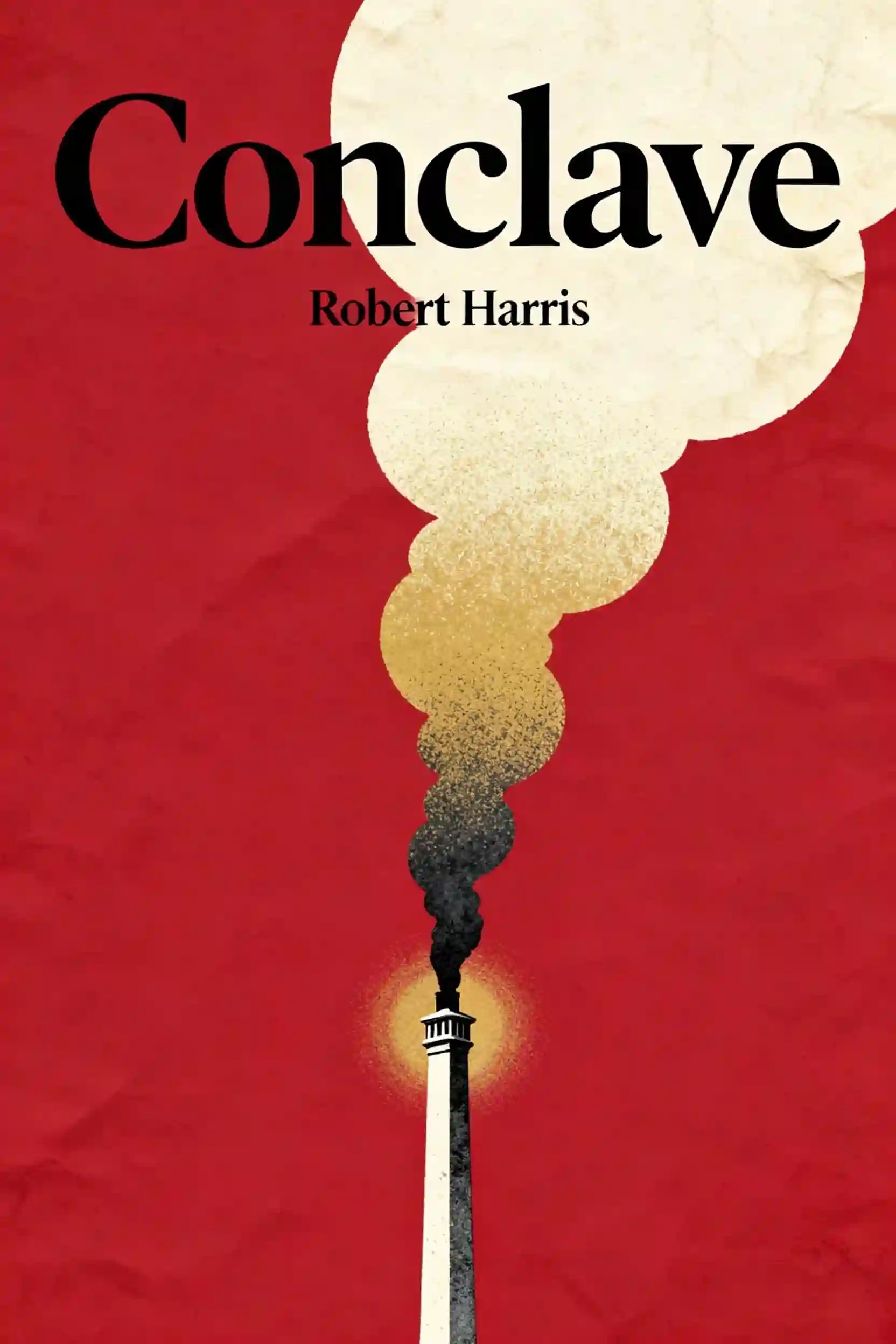
Robert Harris’s Conclave is, first of all, a superb thriller.
It is fast, elegant, and remarkably efficient. There is not much fat on the book. The details are unusually vivid (for a book of this size) without becoming burdensome and the pacing is excellent. The political manoeuvring, moral intrigue and realpolitik behind the election of a Pope is fascinating to learn. Moral Intrigue. Idealism v/s Pragmatism. Means v/s Ends. Virtue and calculation all coexist.
But what stayed with me was something more deeper.
Conclave is also an interesting meditation on the distinction between faith in God and faith in the Church. Or, on the same principle, God and the intermediaries between one and God. The two are not necessarily the same thing. Institutions inevitably (and, sometimes, unfortunately) acquire their own rituals, hierarchies, politics and interests. Over time, the formalism and symbolism surrounding faith can become almost as powerful – and perhaps more important – than the faith itself.
This is the precise tension runs through the book: God on the one hand, and the formalism built around God on the other. Ceremony, robes, rules, tradition, architecture, secrecy (all of which is described in painstaking detail) – can elevate faith, but it can also sometimes obscure it.
And then there is doubt.
One of the more compelling ideas in the book is that doubt need not be the enemy of faith. It may actually be essential to it.
A faith that admits no doubt can easily become certainty; certainty can become dogma; and dogma, eventually, can become unquestioning submission. Doubt introduces humility. It reminds us that we may be wrong, that our understanding is incomplete, and that truth must constantly be sought rather than merely possessed and never re-examined.
Perhaps, and I’m paraphrasing a part of the book where a character says : faith is the strongest not when it eliminates doubt, but when it survives it.
There is something deeply attractive about that idea. Faith tempered by doubt is less arrogant. It does not claim perfect knowledge or certainty. It keeps searching. It remains open to correction. In that sense, doubt may not weaken faith at all – it may purify it and help it excel.
That, for me, is where Conclave rises above being merely an entertaining political thriller. Beneath all the scandal, moral flexibility and intrigue is a quiet examination of power, institutions, belief, symbolism and the human need for certainty, and what fills that need.
Excellent book. Just the right length (not too long not too short).
And, beautifully written.
4.5/5.


Leave a Reply