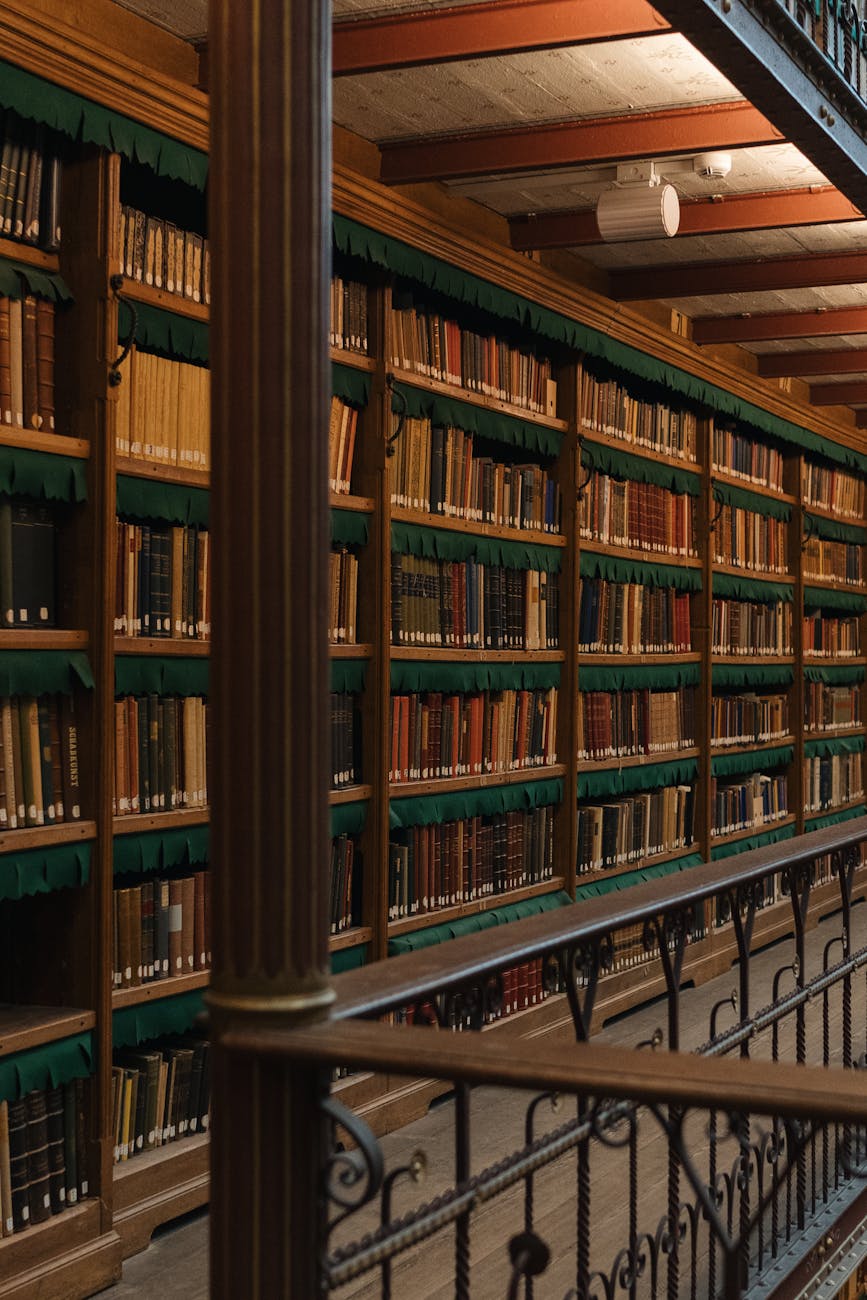
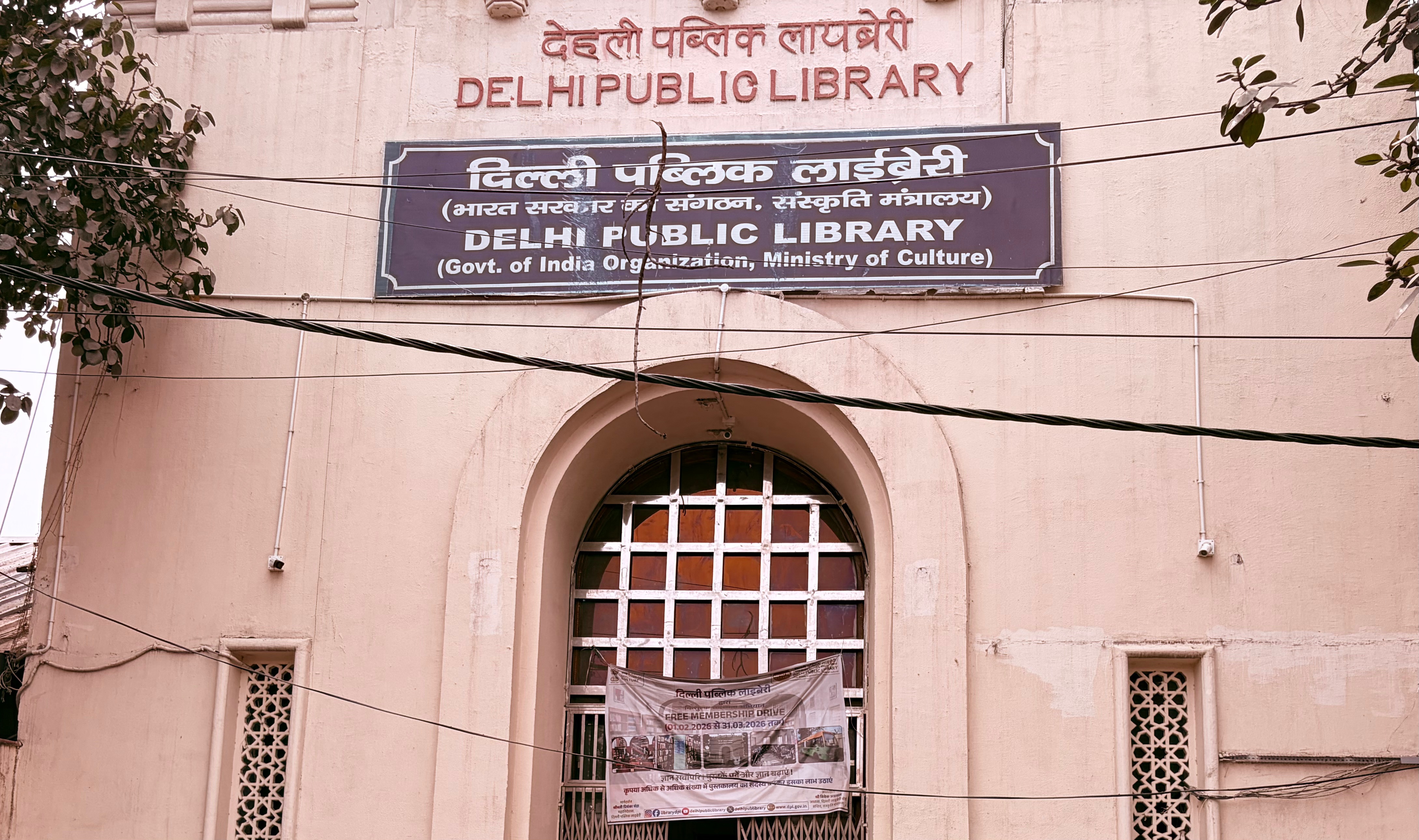
Coming back from a matter today in Tis Hazari, I visited the Delhi Public Library today, after decades.
This is where it all began for me.
It’s 2003-2004, I had dropped out of school. I had to drop out of school.
I knew I could do without the schooling but I still needed an education.
My father told me about the Delhi Public Library near Old Delhi Railway Station.
Membership: ₹2, a year. (Yes!)
I would get my lunch packed — often aloo methi/jeera aloo, two rotis, some curd (Mom would insist) — take the direct bus from Shalimar Bagh. Later, the Metro : from Kohat Enclave to Kashmere Gate & then a change from Kashmere Gate to Old Delhi Railway Station/Chandni Chowk, and show up there in the morning.
I would sit through the day.
Suddenly, instead of school lectures and textbooks that I found tedious, a whole world opened itself to me.
Enid Blyton. Nancy Drew. Agatha Christie. Hardy Boys. The Britannica and other Encyclopedias, J K Rowling, Rohinton Mistry, CS Lewis, Lemony Snicket. Oscar Wilde. Dostoyevski. Anton Chekhov. Readers Digests. Charles Dickens. Bill Bryson’s A Short History of Nearly Everything — my first real science teacher. Hindi fiction. Dharamveer Bharati. Shrilal Shukla. English novels. Arundhati Roy. Salman Rushdie. R.L. Stein before Midnight’s Children. Ruskin Bond before The God of Small Things.
Three books at a time.
And then — The Last Mughal. Which blew my mind differently, because less than a kilometre from where I sat was the very place where it all happened. Where the rebels first appeared at the door of the ageing poet-king, Bahadur Shah Zafar, and put their terrible proposition to him: join us, or else.
I was reading history while sitting close its mighty echo, and an affair with History began which hasn’t ended till date.
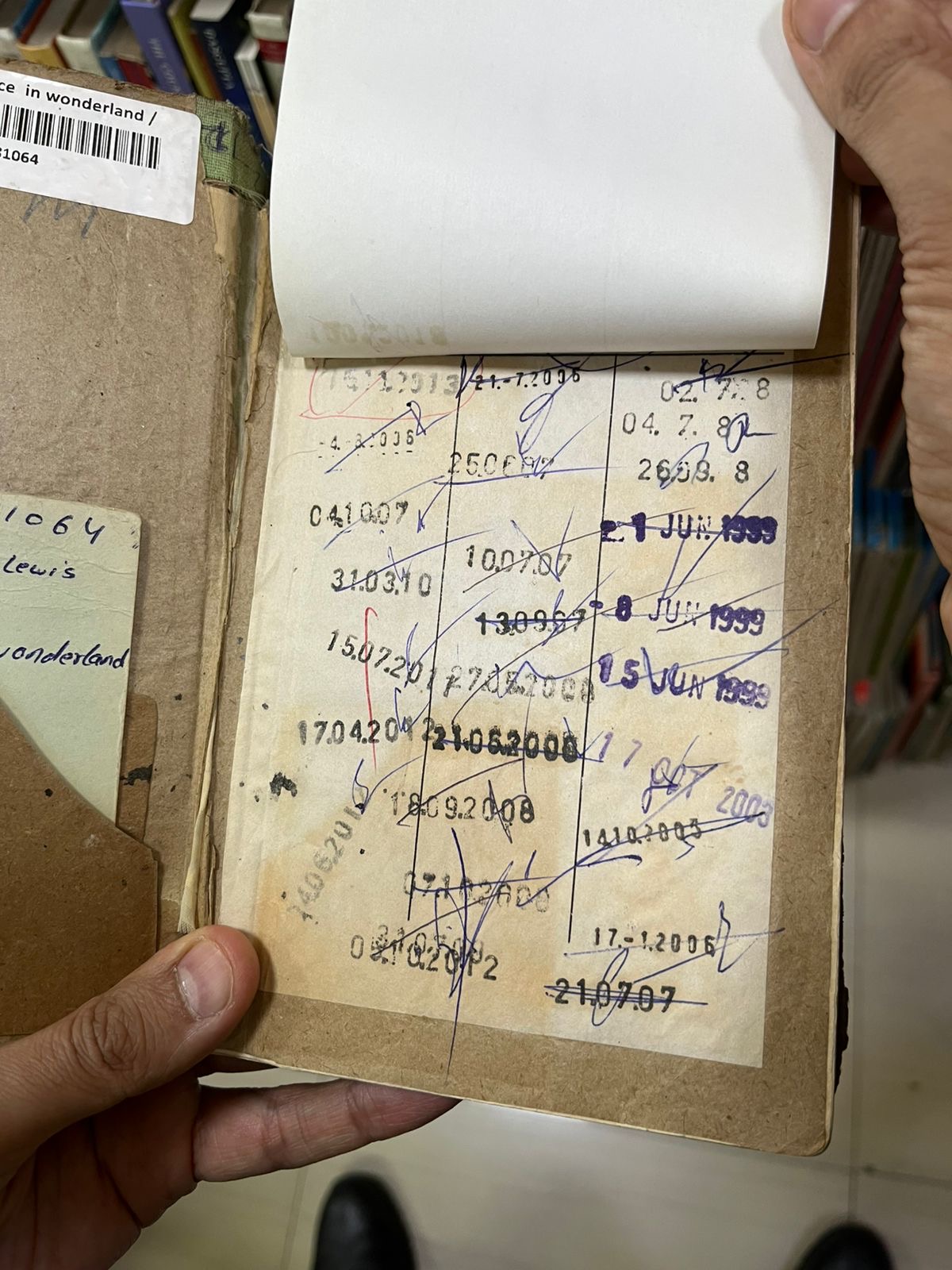
Today I also found the exact copy of Alice in Wonderland I had borrowed in 2004/2005.
The library was a storm. It was violent, the way great knowledge is violent — it blew apart every wall I had assumed was the limit of the possible and the breadth of my own aspiration.
I remember wanting to keep it (the Library) a secret. Wanting it for myself. It felt like an unfair advantage, and I wasn’t ready to share it.
Being the absolute nerd that I was (and am), my greatest fantasy was to be locked in it overnight. To roam the reference section — which obviously couldn’t be lent — after hours, alone. To get to the coveted shelf of new, unprocessed books before anyone else stamped them for issue.
The library was also a harbour. No matter how dismal reality got, here was a refuge.
A place where you could set down whatever life had handed you that morning and let your imagination be the only limit on how far you could go.
Less privilege does not equal less imagination, I learnt. It often meant more. Because imagination was the emancipation too.
Mark Twain said: I have never let my schooling interfere with my education. I didn’t know the quote then. But as it happens, I was living it — on a direct DTC bus, with jeera aloo in a tiffin, for ₹2 a year.
I saw many young people there today. The phones are a distraction, yes.
But I also saw them bent over books in that particular and peculiar way — slightly hunched, slightly lost — and I thought: some of them are having their storm right now. It just looks quieter from the outside.
I have pledged my support to this library in whatever ways I can.
But who am I to give it anything when it gave me everything first.
 The Blog of Bharat Chugh
Leave a Reply