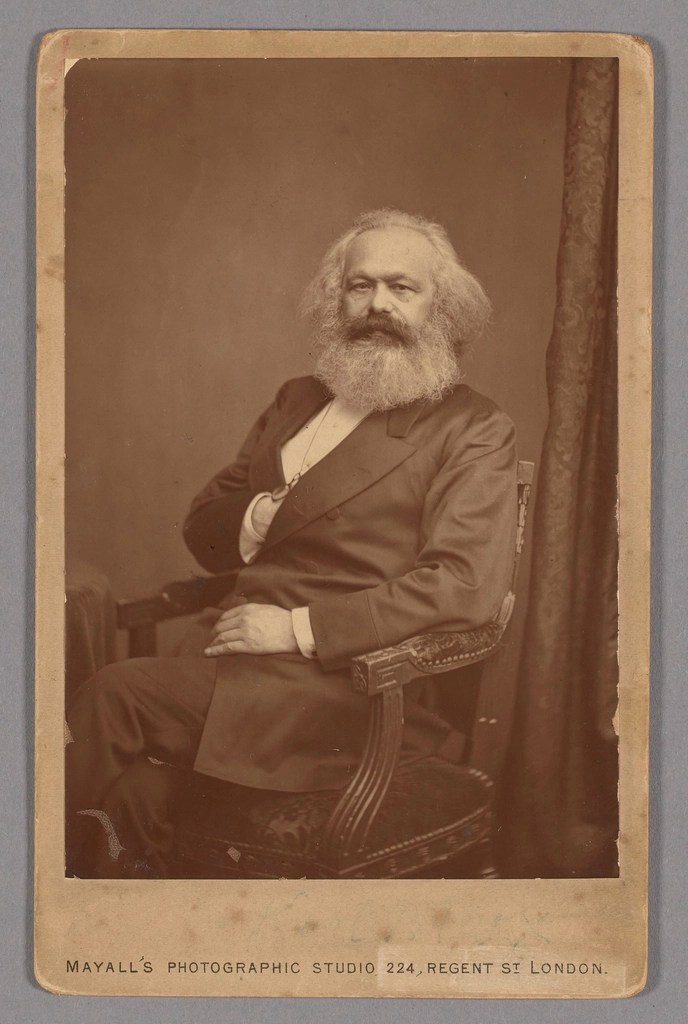
Like many other people who’ve changed the course of history, Marx lived a life of deep contradictions. Marx craved and was used-to the trappings of middle-class respectability, a decent house, a household that kept up appearances, the life of a Victorian gentleman-intellectual, and funded it entirely on Engels’s generosity, while remaining, in every other respect, ferociously, almost pathologically independent. He could not be told. He could not be led. He fell out with nearly everyone who got close enough to matter. A man who wrote of humanity’s emancipation could not, it seems, emancipate himself from these banal dependencies — money and the friend who supplied it. Engels, his lifelong patron, confidante, friend, was himself no proletarian. He had inherited the very kind of wealth Marx spent his life hating and railing against.
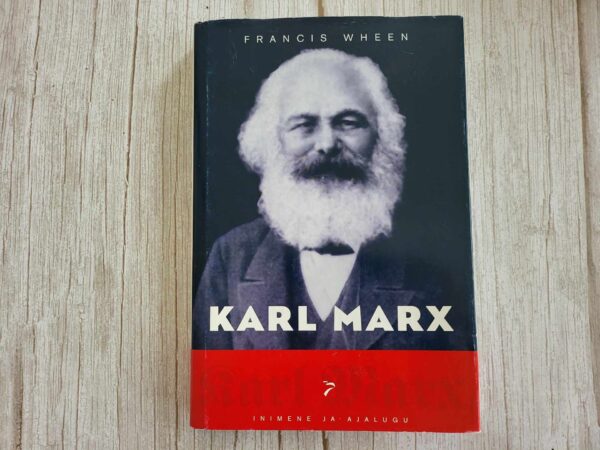
Wheen captures the multitudes that this giant of a man (in more ways than one) contained. Marx was, he writes :
“a gregarious loner, yearning for a bit of solitude in which he could get down to work without interruption yet also craving the stimulus of action and argument.”
The tidal rhythm of advance and retreat, surging forward, then withdrawing was partly circumstance, partly the clearly wilful tension of a man trying to hold theory and practice, contemplation and engagement, in the same restless hands.
Wheen’s Marx is a truly original man with a totally inverted way of looking at the world. He had an almost instinctive gift for turning things on their heads, received wisdom, established truths, Hegelian philosophy, political economy, and finding what others had missed. And the courage to try and craft the world anew. He was also, by temperament, someone who could never resist a fight. Intellectual, personal, political, it made little difference.
On reading the book and his life, what stays with you, though, is also the reader. Marx devoured books with the kind of ferocious, all-consuming hunger that leaves the rest of life as bouts of living between learning and books. His health suffered. His family suffered. His finances, always teetering on the edge of collapse, did collapse repeatedly under the weight of a man who could not stop thinking long enough to earn a living.
He also saw the worker with devastating clarity and wrote vividly with great drama.
“The worker becomes poorer the more wealth he produces”, a line that carries more weight today than it perhaps should.
And Capital, in his telling, was not merely an economic concept but something almost gothic: “dead labour, which, vampire-like, lives only by sucking living labour, and lives the more, the more labour it sucks.” There is a reason Marx endures in literature as much as in economics. He wrote like a man possessed and with great show.
But Marx was not content to merely describe. He was impatient with those who weren’t.
“The philosophers have only interpreted the world, in various ways. The point, however, is to change it.”
This was not just a remark on others but also a confession. He was – after all – a man always spoiling for a fight, and kept swinging back and forth between a contemplative life and a life of extraordinary radical action. The fight made him write and the writing made him fight.
And yet action, in his world, required first the dismantling of illusion. Religion came in for some of his deepest interrogations :
“Religion is the sigh of the oppressed creature, the heart of a heartless world, and the soul of soulless conditions. It is the opium of the people.”
Read carefully, this is not quite the crude dismissal of God it is often taken for. There is grief in it. Tenderness, even. Marx understood why people reached for consolation and escape. He simply believed they deserved something better than consolation, they deserved change. Real change.
Which brings us to freedom. For Marx, individual liberty was never separable from collective emancipation.
“The free development of each is the condition for the free development of all.”
That line from the Communist Manifesto is perhaps his most quietly radical, the insistence that no one is truly free until everyone is. It is also, depending on your reading of the century that followed, either his greatest gift to humanity or the seed of a dystopia, which came to be lived under Stalin, for instance. That aside, it reminded me of some of my most favourite lines of all poetry by John Donne :
“No man is an island, entire of itself; every man is a piece of the continent, a part of the main… any man’s death diminishes me, because I am involved in mankind; and therefore never send to know for whom the bell tolls; it tolls for thee.”,
and even Whitman’s:
“Every atom belonging to me as good belongs to you.”
And then there is the legacy, and which is where things get most complicated, as with most legacies.
Marx is perhaps more misinterpreted than read. I confess that I’ve read only smatterings of what he himself wrote. (Though I am very inspired to read more of him after this, as he is no longer as intimidating, having witnessed glimpses of the Hagrid like creature all putty in the hands of grandchildren). But I digress. I was on impact, and legacy. Wars have been fought in his name by people who have not opened a page of his writing. Regimes have been built and atrocities committed under banners he would likely have disowned. The distance between what Marx wrote and what was done in his name is one of the great tragedies of the world as we know it. “From each according to his ability, to each according to his needs” (Read out to me – first – by my great Father while I was a child). This gorgeous, elegant, humanist formulation has been buried under decades of ideology deployed in his name but rarely in his spirit.
Where you land on Marx depends, as it always has, on which side of history you stand. To some, he was the working man’s greatest friend — the one thinker who told an uncomfortable truth to power with the full force of his intellect. To others, he was a misfortune for humanity, a man whose utopian blueprint became the justification for enormous suffering.
Wheen does not resolve this. He is too good a biographer to even try. What he does instead is to draw the man on pages – flawed, brilliant, sick, stubborn, funny, impossible and let you sit with the complexity. Because whatever your verdict, Marx was not a footnote. Kings and queens fade. Empires dissolve. But this bearded, debt-ridden, boil-afflicted man who spent his days in the British Museum reading room his memory and thought will outlast them all.
Rating: Essential reading for anyone who has an opinion on Marx, which is, well, every one.
 The Blog of Bharat Chugh
Leave a Reply