
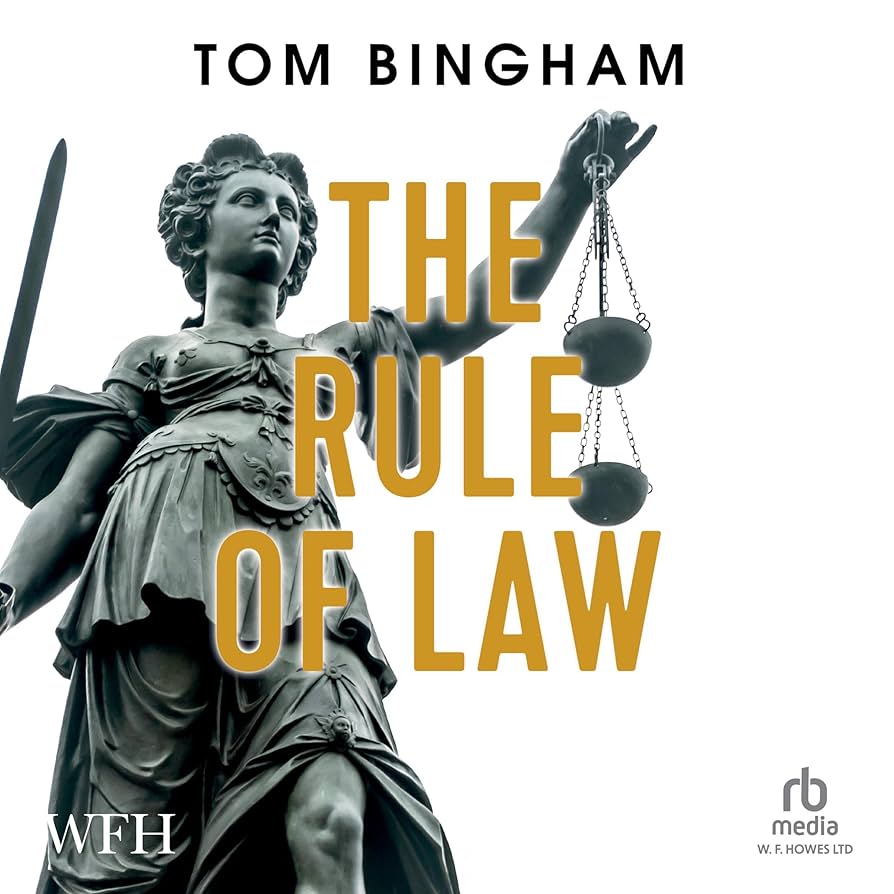
Nature has distributed its prizes unequally. Some are weak and helpless; some are rich and powerful. But thanks to the Rule of Law, there is protection for all. Law, always in theory, and sometimes even in practice, ensures precisely that. It ensures that even the Lambs amongst us can fight, and even prevail, over the Lions, provided they can deploy the law smartly (and afford a good lawyer). The Rule of Law has ensured that every person gets his or her due — apart, of course, from creating magnificent employment opportunities for those who are in love with their own voice and wish to argue with other people for a living.
This book tells the important story of that idea. Rule of Law. It begins with history – tracing its lineage from Magna Carta through the American and French Revolutions and their foundational constitutional settlements (Chapter 2).
The third chapter is a delightful exposition of the vital importance of accessibility of law — a concern that has only grown more acute with the proliferation of often badly drafted legislation. It was particularly heartening to read about progressive judicial decisions elsewhere in the world that have refused to uphold the sometimes extraordinary doctrine that ignorance of the law is no excuse, where the law itself is barely intelligible to those it binds.
The fourth chapter extols the interplay of law, judgment, and discretion – and the subtle, often under-appreciated, nuances of each.
Chapter Five turns to Equality before the Law, explored in both its formalistic and substantive dimensions – a distinction that matters enormously in practice, as any litigator will attest.
The sixth chapter is a searching rumination on Power: how it operates, how it distorts, and how law – at its best — recalibrates the scales of justice to restore something closer to a level playing field.
The seventh chapter addresses Human Rights. Timely, one might say, for times such as these.
Chapters Eight and Nine grapple with the challenges of dispute resolution and the demands of a fair trial – perennial concerns that feel real and timely.
These are followed by what has been rightly called the vanishing point of jurisprudence – the Rule of Law in the International Legal Order — a chapter that reads, in places, like an obituary for something we are still, perhaps optimistically, trying to build.
Subsequent chapters take on Terrorism and the Rule of Law, and the sometimes uneasy relationship between the Rule of Law and Parliamentary Sovereignty.
This is a delightfully original work. In a mere 170 pages, Bingham captures centuries of legal thought and scholarship without ever feeling compressed or cursory. He moves from one glowing insight to the next, drawing seamlessly from philosophers, judges, judgments, statutes, and his own magisterial commentary – the fruit of decades of extraordinary legal experience at the highest levels.
The book is rightly regarded as a modern classic. It renders some of the most important concepts in constitutional and legal thought simple – but, crucially, not simpler.
Highly recommended for any lawyer, judge, or student of the law who believes that these ideas still matter, and that the fight to uphold them is worth having. For whatever is worth having (or dying for) is definitely worth living for and worth striving for.
 The Blog of Bharat Chugh
Leave a Reply