*Abstracted from a twitter thread of Mr.Chugh here
1. I can speak from experience that young, idealistic and extremely talented youth aspire to be adjudicators. Telling them to park the aspiration for 3 years and enter practice instead may hurt this aspiration more than it helps their ability to adjudicate. We simply need young, energetic and idealistic candidates and fresh blood in the system.
2. It may not be accurate to equate young judges with fresh law graduates. We are missing that they undergo extensive training before actually assuming charge which is long and extensive. Also, the process of exam takes at least one and a half years to three years. So by the time one actually takes up that seat, there is some amount of maturity in the candidate. Also, it must be noted that a 21 or 23 year old judge is an exception and not the rule at all. I don’t think, and subject to correction, the average age is usually <25 years. Also, they get to sit with serving judges right from the magistrates to the Hon’ble High Court and gain very rich experience in the process.
3. I can say from experience, this year-long process is not only thorough but life-changing. We may always have conversations about ways in which the training may be improved, and the judicial academies are already working in that direction.
4. In any case, I don’t think a 3-year experience at the bar makes a huge difference to a young judge’s ability to adjudicate. Law is a marathon not a sprint. It takes a decade to find one’s feet in the Bar. 3 years may not have any added tangible effect on the overall suitability of the candidate.
5. Often, especially in litigation, youngsters struggle for a few years and not everyone is able to find a good senior/chambers to work-in. Some more than others. Further, the profession itself is not a panacea, let alone a solution towards improving the services or the quality of judges.
6. We must remember that the profession is saturated, unstructured and places a huge premium on privilege of various kinds – social, gender, geographical, and financial. In the absence of a level playing field, not all who want to be judges may have an equal or unbridled path into the Bar. Having a minimum practice requirement would operate harshly and disproportionately against first generation lawyers, women, underprivileged.
7.. The opportunities at the Bar are simply not enough, equal or perfect substitutes for a career in the judiciary. Adjudication is a career by itself. There’s no reason why only lawyering should be a stepping stone towards a judicial career. The constitution was – itself – envisaged to permit even the Supreme Court to have distinguished jurists/academia as judges.
8. I believe catching them young, training them in the life of a judge has certain benefits, especially with our mounting arrears and the new technocratic mindset needed. We must remember the fact that young judges’ jurisdiction is constrained on accounts of pecuniary and subject matter limits.
9. The ‘too young to judge’ argument also discounts the fact that a 24 year old surgeon can perform a life-threatening surgery. A 24 year old IAS and IPS officer routinely takes decisions that alter people’s lives, often irrevocably and often without the guard-rails of judicial appeals and limited jurisdiction. The age argument could be made there too.
10. Also, spending 4-5 years at that Bar (which is inevitable, given the fact that exam process itself takes time and 3 years is the minimum requirement), may make the entry level judicial services unattractive as a career option for young graduates. Someone with a 7 year experience at the Bar is unlikely to want to start off at the entry-level. They would then probably go towards the district judgeship. The idea should be to catch them young, train them as adjudicators and progressively build skills suited for greater responsibility. 3 years at the Bar would not build adjudication skills acquired over the course of early judgeship years.
Also, the conversation that we should be having instead is :
A. Are we attracting the best talent there is or are we losing that out to law firms, corporate firms and top law chambers;
B. Are we retaining the best talent, and training them the best way we can.
_____________
Views abstracted from a conversation with The Hindu:
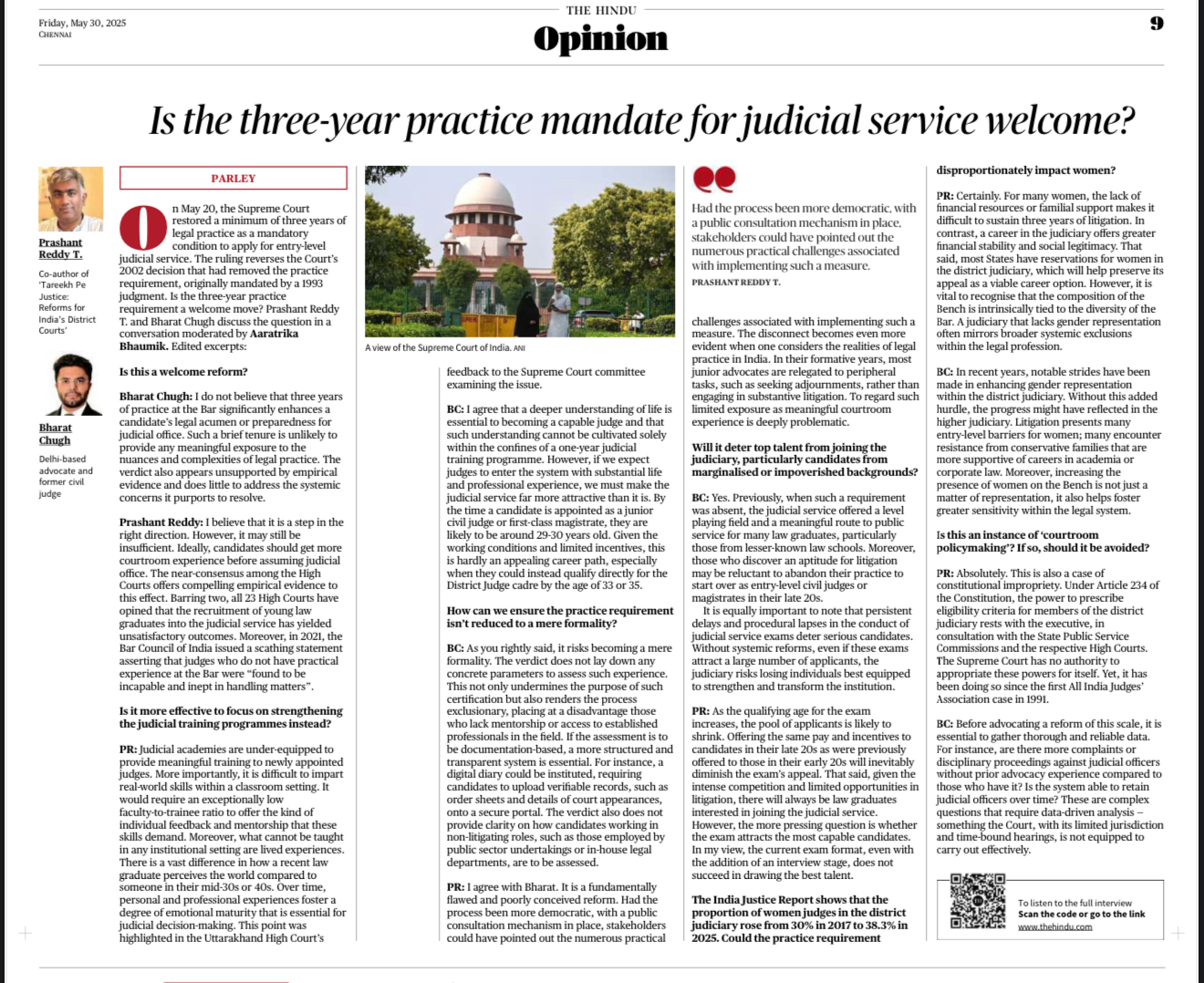
The entire conversation with The Hindu may be accessed here and the 54 minute podcast here
 The Blog of Bharat Chugh
Leave a Reply