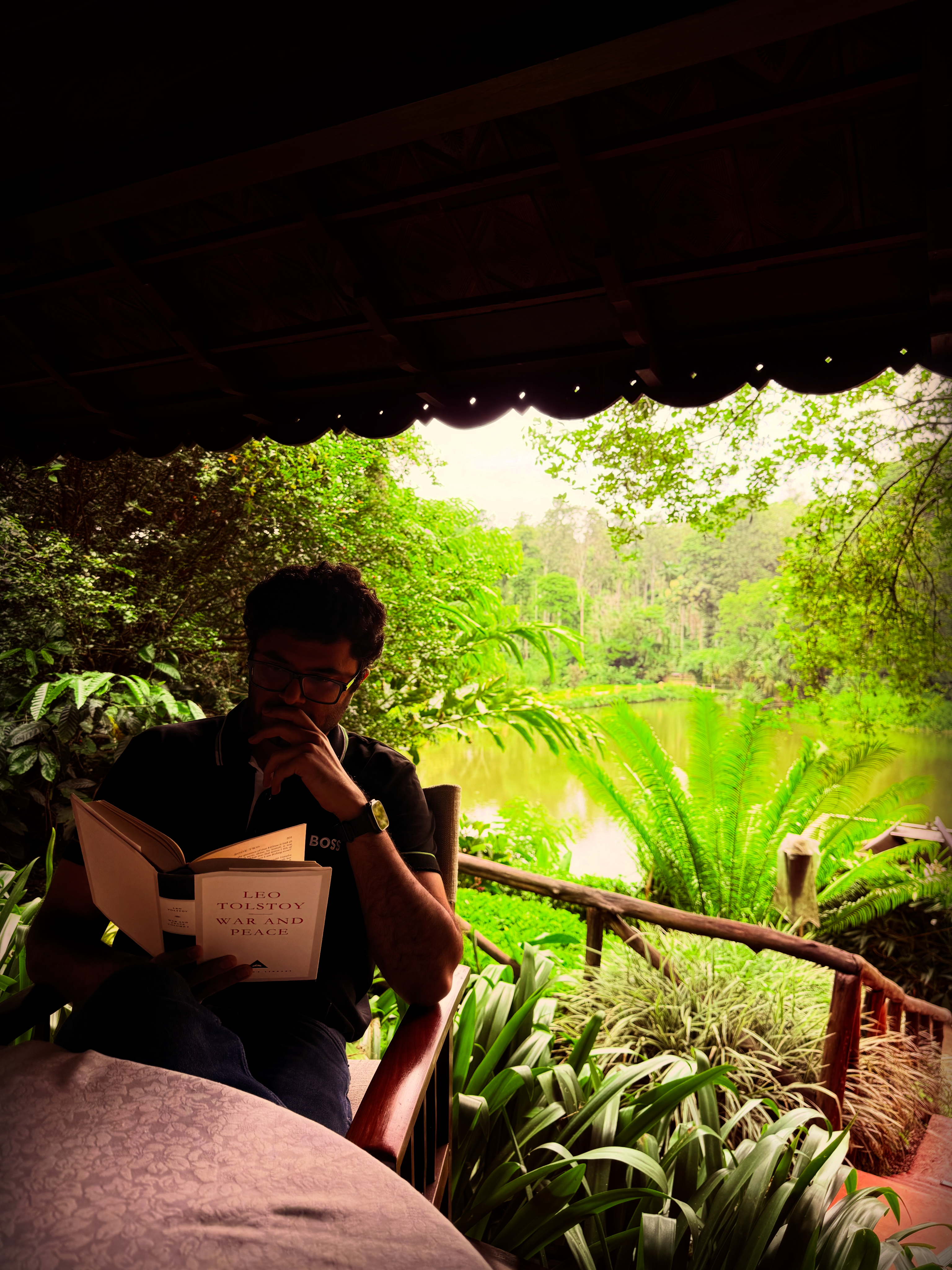
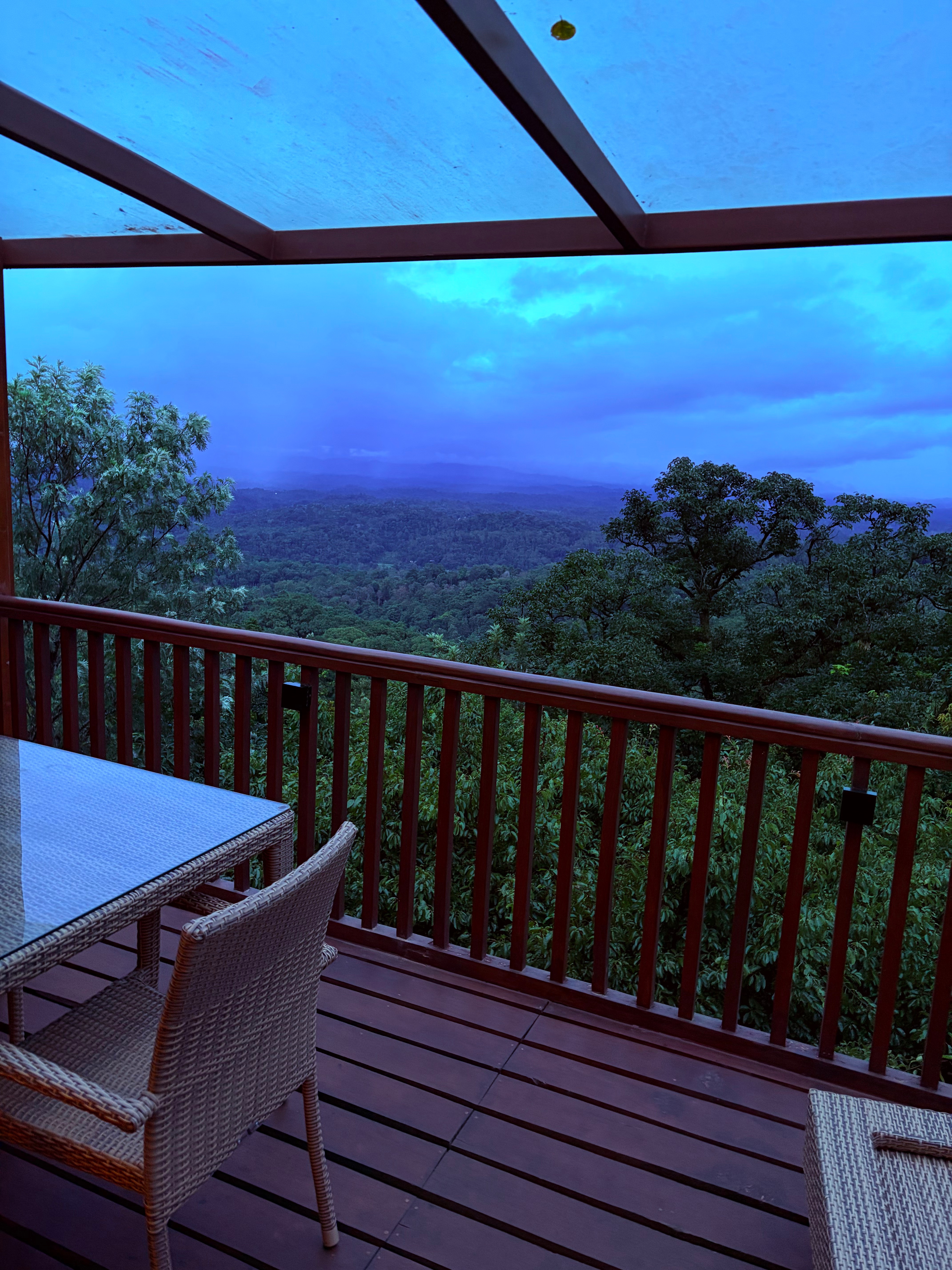
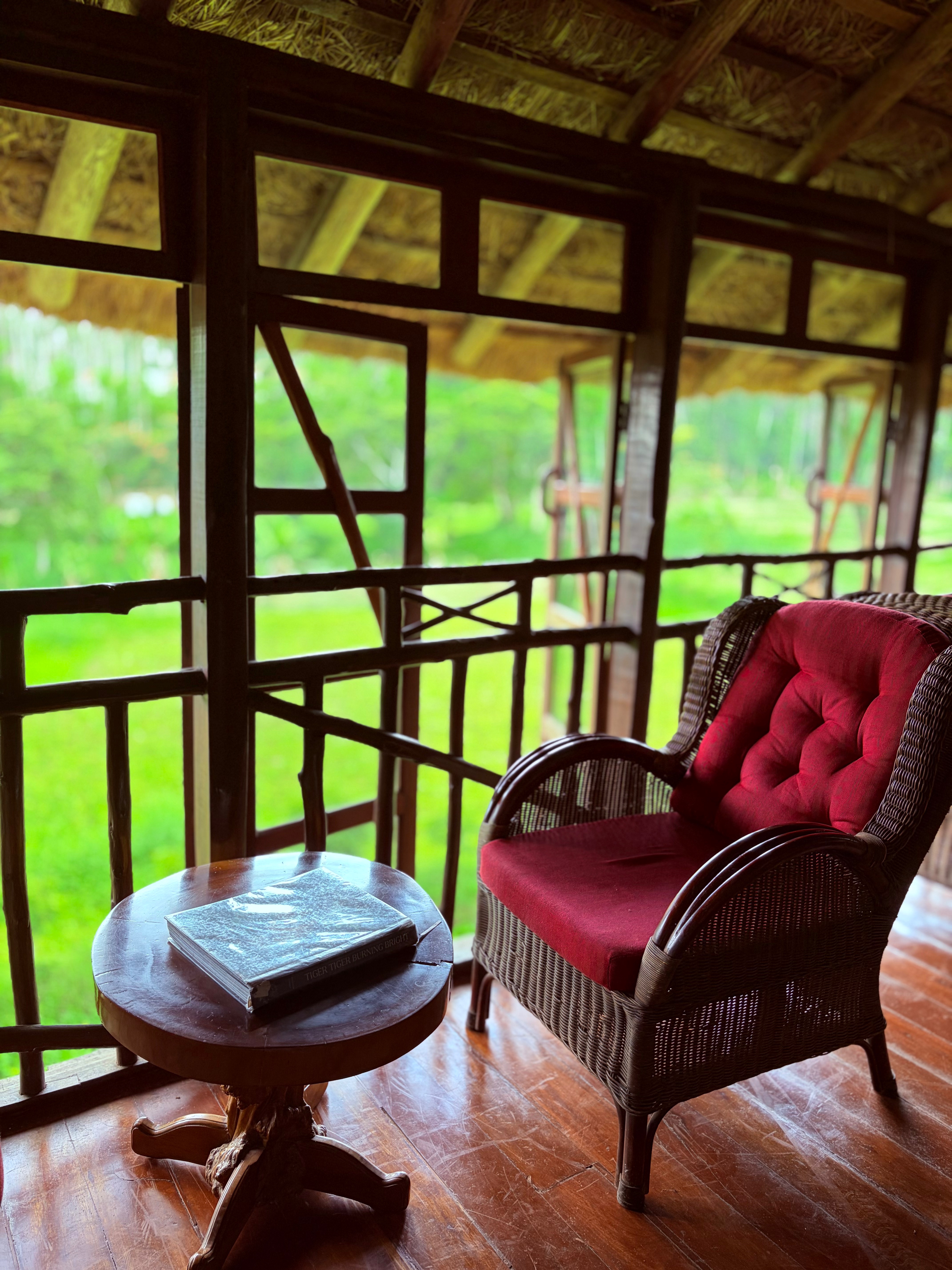
I read War and Peace over ten days in Coorg, in a red cushy chair overlooking a coffee plantation or a balcony above the misty mountains, with too much coffee, too much rain, and no real plan.
I’d avoided this for years. It was simply too long, too many names to hold and juggle in my memory, too much history and Russia-specific context I didn’t have and thought Tolstoy would expect the reader to have.
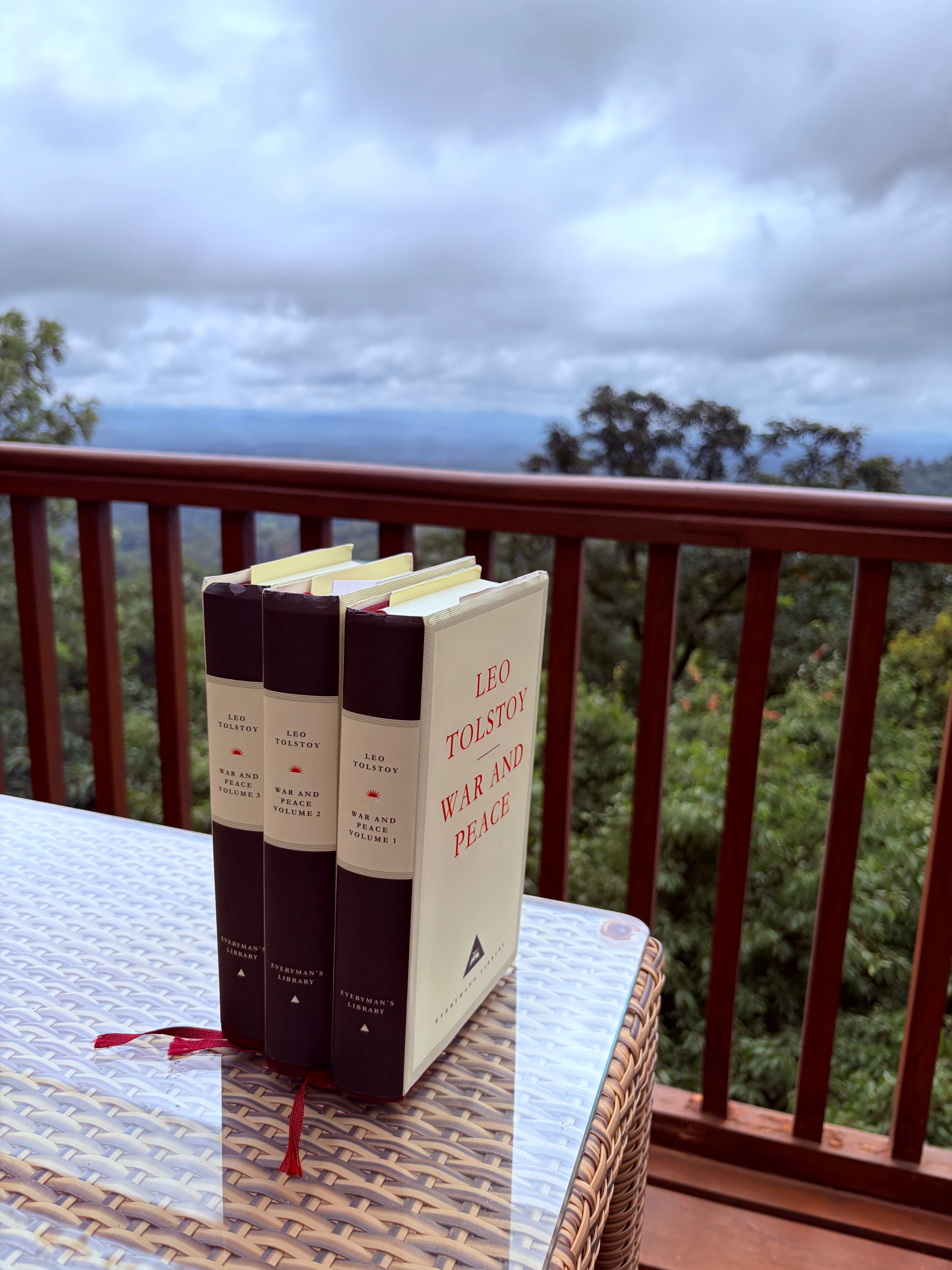
But something gnawed at me, a gauntlet not picked up, another difficult thing (good for me) evaded. The visually stunning Everyman’s 3 volume edition – that I’d picked up on a whim – also glared at me accusingly each day from the bookshelf. Also, the fact that this has been claimed to be ‘the greatest novel ever written’ weighed on me. The fact that I’d read A Suitable Boy almost a decade back had already primed me to a 1500+ page novel and capacious worlds they can build and have you inhabit.
So I read it. The court vacation and not having a 25k steps a day European holiday this time really helped.
And I was hooked and captivated from the very start.
Tolstoy is a brilliant writer, and I don’t think there’s anyone like him. Isaac Babel rightly said about him that if the world could write by itself, it would write like Tolstoy. That’s how stunningly simple, natural, honest, brilliant, and rich he is, all at once.
As the book builds up, the word “epic” soon comes to mind as this isn’t really a novel in the way we use that word now, which is a tight, single story about a handful of people, proceeding in a certain order.
This one’s closer to an old epic, the kind that creates and holds an entire world together: a war, an empire, a civilisation, several families, a whole way of life, all at once, with the patience to let each of them breathe properly and come to life.
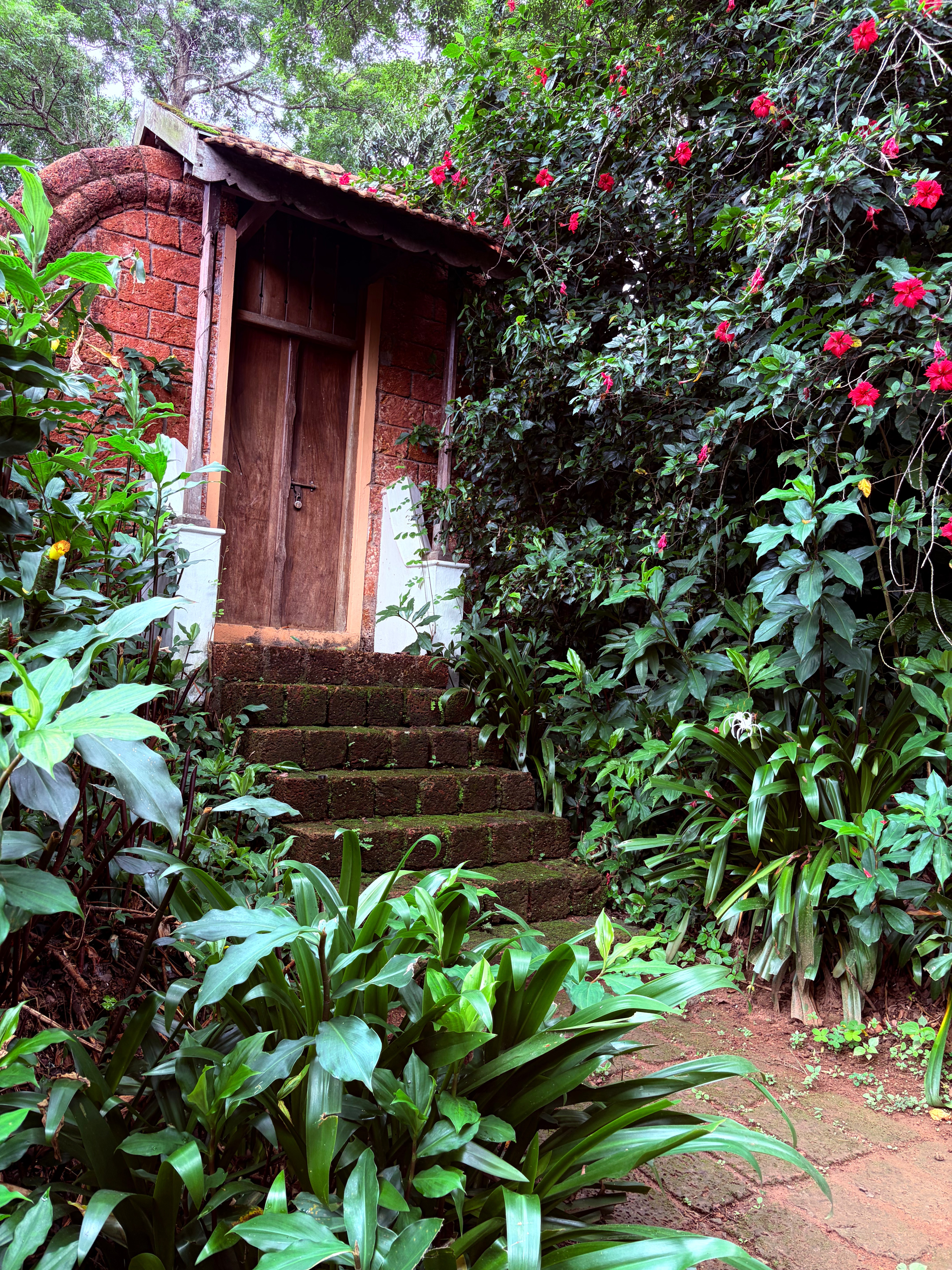
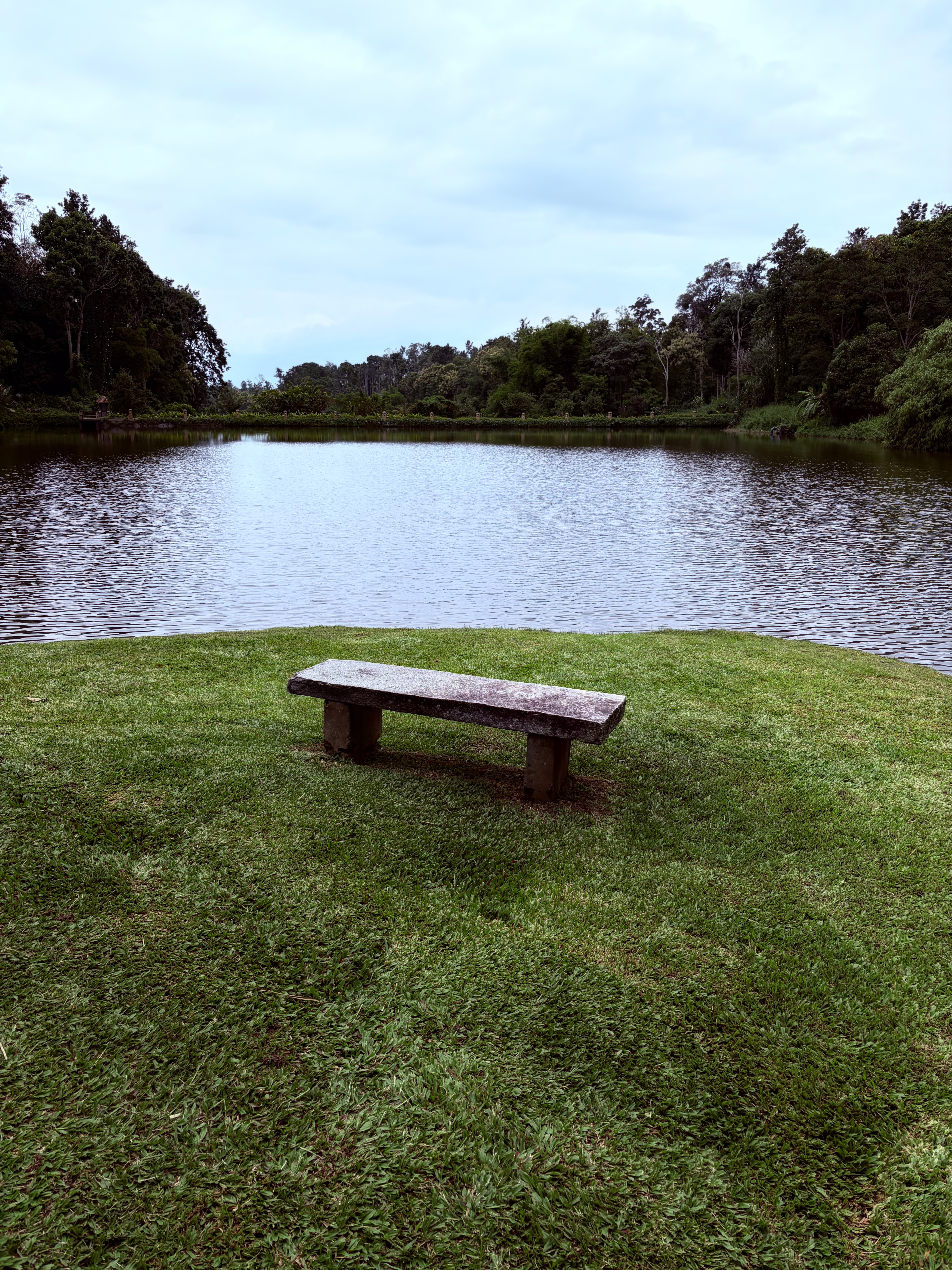
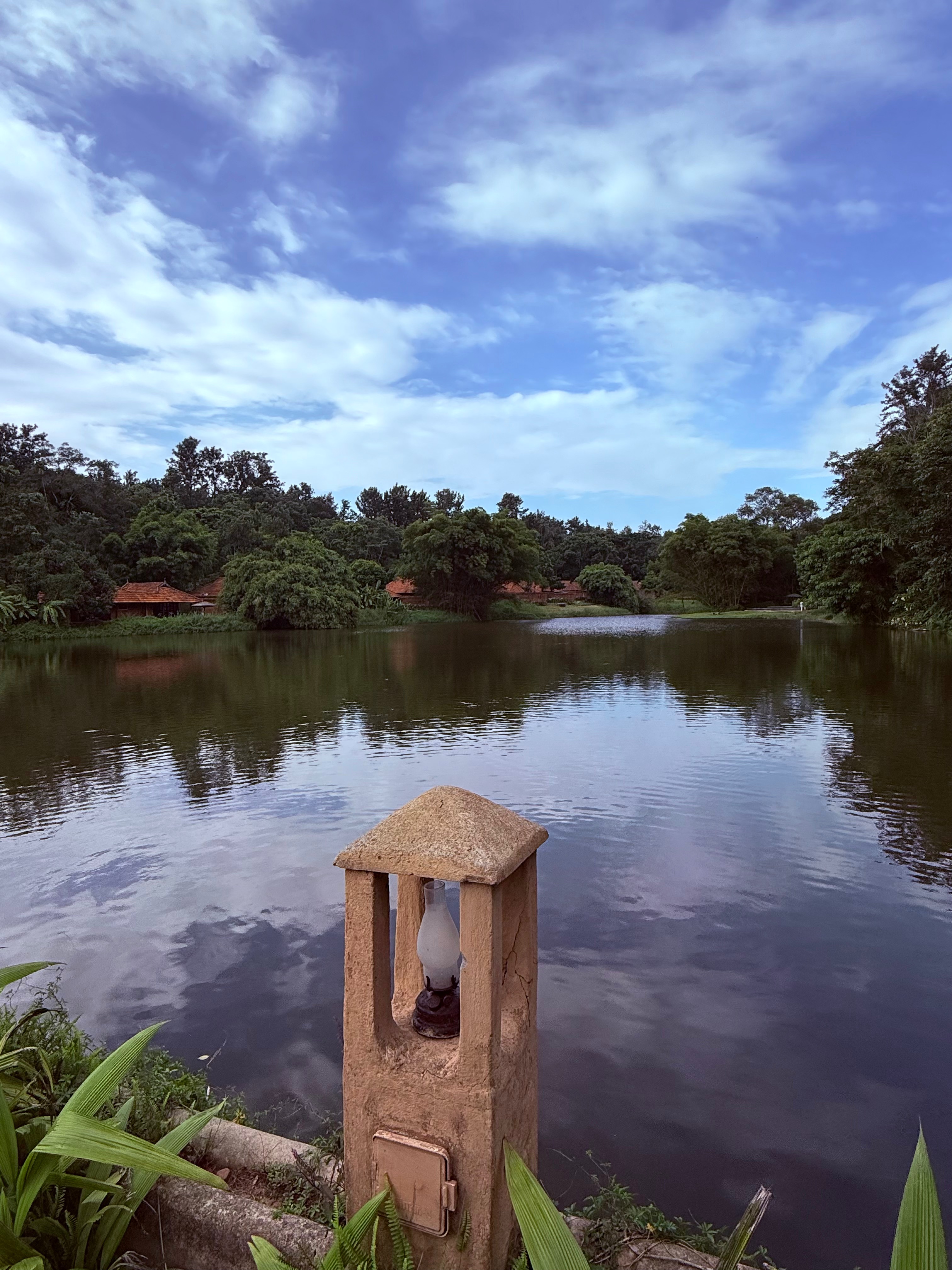
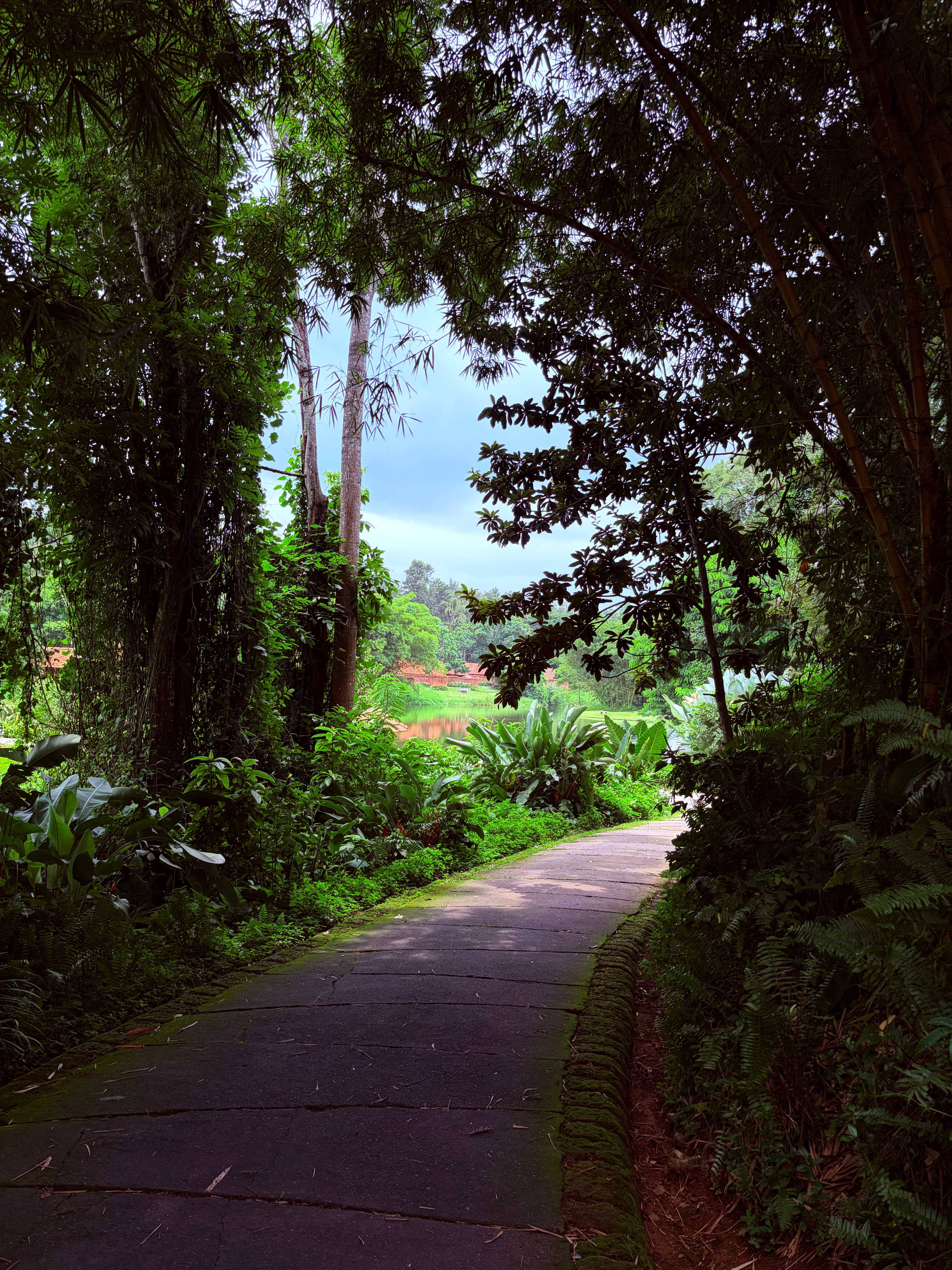
But it’s not just one thing happening after another. The spiritual and philosophical weight of the book is immense. Weighty questions of fate, faith, death, and what a life is actually for, are sitting under almost every chapter — but Tolstoy never makes you feel the weight of carrying it. He wears it lightly. There’s no chapter that announces itself as The Big Idea Chapter. A soldier looks at the sky and something enormous happens in four sentences. A man shares his food in a prison camp and an entire philosophy of happiness gets quietly handed over to you without a word of explanation. You don’t notice you’ve been given something heavy until much later, when you start thinking back on what happened. The reflection for me happened on the walks along the lake, ravines and plantations that followed the reading sessions.
And for all that scale of the book, the reading itself is never difficult. No knotted or convoluted sentences, no showing off. A simplicity that comes from having nothing to prove, nothing to impress others with and being so comfortable in one’s skin.
On people, Tolstoy just looks at people closely and tells you what he sees, plainly, which is exactly why it hits you so hard.
What actually got me wasn’t just the war scenes, even though there are some great ones. Or the discourse on strategy. Or the clever banter and back and forth in Russian ballrooms.
It was Tolstoy’s argument, repeated in a dozen different ways, that nobody is really in control. Not Napoleon, not the generals, not the characters making decisions about their own lives. Things happen because a hundred small things line up, and only post-facto do we invent a reason for why it had to go that way. And we often blame or credit some “hero” for it, who is no such thing.
It’s also, underneath its magnificent seriousness, a quiet parody of people, power, and hubris. Napoleon struts through the book convinced he’s creating history, and Tolstoy lets him talk himself into a Russian winter on the strength of nothing more than a daydream about Alexander the Great and an old empire he half-remembers from school, and a few people shouting out his name, who — clearly — didn’t know better.
Generals draw up battle plans with the confidence of men who’ve never been shot at, and some of them even sleep through war sessions or read (French) novels through it. None of it is shouted at you as satire and Tolstoy keeps a perfectly straight face throughout, which somehow makes it funnier and more damning than if he’d been openly mocking anyone. The powerful, in this book, are rarely as in control as they look. Mostly they’re just the loudest people in the room, or the ones with the best PR.
And the discourse around free will. I’ve, myself, thought about the challenge to free will for a while now, read around it in different places, so it was good to see Tolstoy wrestling with the same thing well over a century ago, arriving at it through a war and an empire’s collapse.
He doesn’t offer a way out of the discomfort. He just leaves you with it.
There’s also a quieter argument running alongside the one about control, and it may be the one that actually stays with you longest. War, in this book, is mostly meaningless. Not thrilling, not noble, not even properly tragic in the grand sense — just confused men doing confused things for reasons that dissolve the moment you look at them closely.
What doesn’t dissolve is kindness and compassion. A man giving away food he doesn’t have to spare. A small act of attention paid to someone with nothing left to offer back. Tolstoy seems far less interested in anyone’s plan to reform the world than in what a single person does for another person standing right in front of them. The big ideas — empire, glory, history, even reform — keep collapsing under their own weight. The small ones, oddly, hold.
The zeal to find out the best way to live is also pervasive throughout the book.
And nowhere does that seeking feel more human than in what it does to a single person stripped of everything. A character loses everything, money, freedom, comfort — and realises happiness was never about how much he had. It was just there the whole time, whether he had silk sheets or a patch of cold ground to sleep on.
By the end I wasn’t really reading this book so much as living inside it, and I had to consciously climb back out once I was done — back to my own scale of Life, after ten days spent at the side of people whose lives kept getting tested by war, captivity, ruin, and grief. Watching them change because of it, some growing into something better and steadier, others quietly coming apart, was the most moving part of the whole experience.
I came back from Coorg rested, which was the plan.
The book, I’m still coming back from.
 The Blog of Bharat Chugh
Leave a Reply